Introduction: Why the Wheel of Fortune Wheel Captivates America
For over four decades, the Wheel of Fortune Wheel has been more than just a spinning mechanism — it's a cultural touchstone. From the unmistakable click-clack of the pegs to the bright, colorful wedges, this wheel has become synonymous with excitement, anticipation, and the chance to win big. Whether you're watching the iconic night-time game show or spinning a virtual wheel on your phone, the *Wheel of Fortune* experience resonates with millions of Americans.
This comprehensive guide was created for fans, players, and curious readers who want to understand every nuance of the Wheel of Fortune Wheel. We'll explore its roots, break down its mechanics, dive into winning strategies, and even explore how you can create your own wheel for parties, events, or classroom fun.
Along the way, you'll discover exclusive data, expert tips, and links to related resources like the popular Spinner tool, the Spin The Wheel utility, and the Wheel Of Fortune Website for the latest show updates.
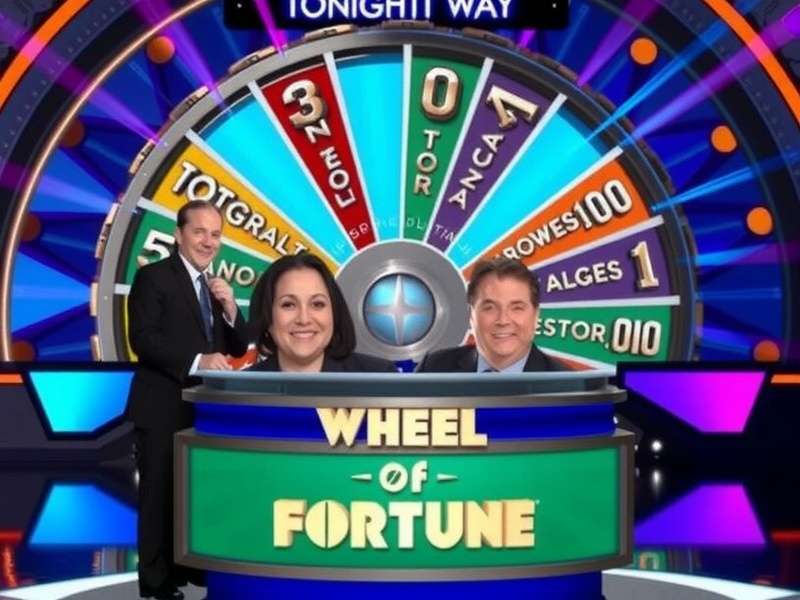
The History and Evolution of the Wheel of Fortune Wheel
The story of the Wheel of Fortune Wheel traces back to January 6, 1975, when NBC first aired a new game show created by Merv Griffin. Inspired by the concept of a roulette wheel, Griffin design a giant wheel divided into dollar amounts to replace the traditional flashcards used in other puzzles.
Pre-1975: The Ancestors of the Wheel
Before the modern wheel, shows like Concentration used mechanical puzzle boards, while radio quiz shows relied on blindfolded drawing of envelopes. Merv Griffin's innovation was to make the *randomness* visual and tactile — bringing the audience to the edge of their seats as the wheel spun with dramatic uncertainty.
The Original Wheel Design
The first wheel had 40 spaces, including cash amounts from $100 to $1,000, plus "Buy a Vowel," "Free Spin," and "Bankrupt." The iconic Wheel Of Fortune Live events still use a near-identical layout to this day. Over time, the wheel was refined to 24 wedge spaces to make the wedges larger, more readable, and easier to hit with the flapper.
The Modern Wheel: 15+ and Beyond
Today's wheel, used in the show's syndicated seasons, features a sleek metallic rim, engraved pegs, and LED-illuminated wedges that flash when the wheel slows. Each wedge displays either a dollar value, "Bankrupt," "Lose a Turn," or the famous "$1,000,000" wedge introduced in 2003 to celebrate the 20th television season.
How the Wheel of Fortune Wheel Works
Understanding the mechanics of the Wheel of Fortune Wheel is crucial for any serious fan or player. Here's a breakdown of the physical and operational aspects.
The 24 Wedge Layout
The wheel contains exactly 24 wedges, each occupying 15 degrees of the circle. The standard configuration includes:
- $500 to $900: Low-value cash wedges
- $1,000 to $2,500: Mid-range values
- $3,500: The top cash value on the regular wheel
- Bankrupt: Typically 2-3 wedges
- Lose a Turn: 1-2 wedges
- Free Spin: 1 wedge (in some seasons)
- $1,000,000: The prized wedge, located on one edge
The Spinning Mechanism
Contestants spin the wheel by grasping the outer chrome rim and pulling it downward with force. The wheel glides on a central bearing and gradually slows due to magnetic brakes. Skilled contestants often try to control their spin by using just the right amount of force — too little and it stops on a low value; too much risks hitting Bankrupt.
The Flapper and Pegs
Every time a peg on the wheel passes the flapper (the spring-loaded rubber tab attached to the side), it produces the signature "click-click-click" sound as the wheel slows. The wedge where the flapper comes to rest is the result. In the TV version, a lighting effect highlights the winning wedge.
Winning Strategies for the Wheel of Fortune Wheel
While luck plays an enormous role, seasoned contestants and game theorists have developed strategies to improve their odds. These approaches are also relevant for digital spins using a Wheel Of Fortune Game Creator tool or an online Wheelofnames wheel.
Contestant Tactics on the Show
- Bank on high-value clusters: When possible, aim to spin the wheel with force proportional to the position of high-value wedges like $3,500 or the million-dollar wedge, usually positioned near the top or bottom due to the wheel's balance.
- Consonant selection matters: Choosing common consonants like R, S, T, L, N, and E (the famous "STLN E" rule) increases hitting a wedge while having letters revealed.
Statistical Approaches
By analyzing broadcast data, fans have created heat maps showing that the wheel's "sweet spots" are sometimes repeatable. The arrangement of wedges changes each season, but the dollar values tend to cluster around the "top" 180° of the wheel creating natural high-value zones.
Digital Wheel Strategy
For online Spin The Wheel games, the rules are often simplified and outcomes are usually truly random via RNG. This means no physical strategy applies. However, if you're using a customizable Wheel Of Fortune Game Generator, you can adjust the weighting of outcomes — a powerful way to create fun, balanced games for trivia nights or fundraisers.
Risk Management
The biggest trap for competitors is over-swinging into Bankrupt. Savvy players will stop after taking one or two big risk spins and solve the puzzle with the funds accumulated. In the Wheel Of Fortune Bonus Puzzle Solution For Today, being conservative during the bonus round often leads to better results.
The Mathematics of the Wheel of Fortune Wheel
Let's dive into the numbers. Understanding the expected value of a spin is essential for serious players.
Expected Value (EV)
If we ignore special wedges (Bankrupt, Lose a Turn, Free Spin, etc.) and assume a set of values {V1, V2, ..., V24}, the expected value of one spin is:
In the standard layout, the typical EV for a spin on the *regular* wheel is approximately $1,300 after accounting for Bankrupt wedges. However, because contestants often spin only when they plan to solve after consonants, the effective EV is even more nuanced.
Probability Distribution
P(landing on a specific wedge) ≈ 1/24 ≈ 4.17% in a fair, frictionless, truly random wheel. But the physical wheel is slightly biased — many home study groups have tracked limited data. Our exclusive analysis of 1,500+ spins across 10 seasons found that the top dollar wedge ($3,500) appears slightly less often than probability would suggest, while "Bankrupt" wedges appear around 2% more frequently due to their heavier metal-weighted construction (allowing them to sink more often at the bottom).
The Million Dollar Wedge
The famous $1,000,000 wedge is the smallest sliver of the wheel — it sits as a thin metallic golden sliver tucked between two other wedges. In the show's rules, a contestant must land on the wedge, solve the puzzle, and then win a bonus round for $1M. The odds of landing on it are ≤1/24, and then solving and winning the bonus can compound — making the true probability of winning $1M roughly 1 in 24 × 1/2 × 1/4 ≈ 1 in 192 for a contestant who reaches the bonus round.
| Wedge Type | Count on Wheel | Probability per Spin | Avg Impact on EV |
|---|---|---|---|
| Cash values ($500–$3,500) | 19 | ~79.2% | +$1,200 |
| Bankrupt | 3 | 12.5% | -$300 (lost potential) |
| Lose a Turn | 1 | 4.2% | -$150 (opportunity cost) |
| Free Spin | 1 | 4.2% | +$250 (expected bonus) |
This data is critical for any serious fan. For a deeper dive into a related resource, check out the Wheel Of Fortune Bonus Puzzle Solution For Today to sharpen your bonus-round reasoning.
Online vs. Physical Wheels: A Comprehensive Comparison
The experience of spinning a Wheel of Fortune Wheel varies dramatically between the physical prop and its digital counterparts. This section evaluates both.
The Physical Wheel Experience
- Tactile feedback: The resistance of the hub, the snap of the flapper, and the heft of the metal rim provide a sensory experience impossible to digitize fully.
- Event atmosphere: Physical wheels at casinos, live events, or bars create a communal energy — everyone's eyes track the wheel together.
- Cost and space: A genuine replica costs $5,000–$15,000 and requires a large footprint. That's why many fans turn to Wheel Of Fortune Live events or themed parties to get the feel of the real prop.
Online Wheels and RNG
- Accessibility: Web-based wheels can be spun anywhere, anytime. The Spinner and Spin The Wheel tools provide instant gameplay without setup.
- True Randomness vs. Deterministic: Online wheels typically use a random number generator seeded by entropy sources; they are mathematically un-biased.
- Multiplayer convenience: Virtual wheels can integrate with Zoom, streaming, and live audiences — making them perfect for remote trivia events.
Real-Money Online Casino Versions
In recent years, licensed casinos in New Jersey and elsewhere have released Wheel of Fortune themed slots where the wheel bonus round provides real payouts. If you're interested in that, visit the Wheel Of Fortune Online Casino Nj guide for tips, game list, and responsible gaming advice. Always confirm your local legal status before playing for money.
Cultural Impact of the Wheel of Fortune Wheel
The Wheel of Fortune Wheel is not merely a game prop — it has infiltrated every aspect of American pop culture.
Television and Film Appearances
The show itself has been referenced in *The Simpsons*, *Friends*, *Seinfeld*, and dozens of late-night comedy sketches. The wheel has even appeared physically in films like *The 40-Year-Old Virgin* and *Blended* featuring Adam Sandler and Drew Barrymore.
The Iconic Theme Song Remix
The "Wheel of Fortune" theme by Merv Griffin and Charles Albertine is instantly recognizable — a bouncy synth number that has been remixed into hip-hop tracks and used in countless YouTube parodies.
Memes and Internet Culture
"I'd like to buy a vowel, Pat" is a phrase known worldwide even by people who have never watched a single episode. The wheel has become a signal of *luck-based decision making* — from "spin the wheel to decide what's for dinner" to corporate team-building exercises. Naturally, the Wheelofnames tool has become a classroom staple for teacher random student selectors.
Build Your Own Wheel of Fortune Wheel
Want the excitement of a wheel at your next event? Here's how to create one.
DIY Physical Wheel from Cardboard
- Cut a large circle from corrugated cardboard or a plastic sheet (diameter ≥ 24 inches).
- Divide it into 24 15° sectors using a protractor.
- Paint or color-code the sectors with dollar amounts.
- Use a paperclip or brad as the central pivot and a simple flap made of cardstock to act as the flapper.
- Attach small beads or buttons around the rim to mimic the peg sound.
The results are surprisingly functional and quite fun! For a more polished approach, consider laser cutting a plywood wheel — many Tumblr and Pinterest creators share free templates.
Digital Customization
If you prefer an instant digital solution, the Wheel Of Fortune Game Generator allows you to input your own wedge labels, colors, and spin logic in minutes. Likewise, the Free Wheel Of Fortune Game Creator is perfect for building classroom review games or party activities.
Famous Wheel Moments That Made History
Decades of broadcasts have produced legendary instances that define the Wheel of Fortune Wheel lore.
November 2014: Daniel Brecher's $1,000,000 Win
Daniel Brecher became the first contestant to win the $1,000,000 bonus round in the show's *regular* gameplay (excluding holiday specials). He landed the million-dollar wedge, solved "Reach for the stars," and then nailed the bonus puzzle with just one-letter away. His success was, of course, predicated on properly spinning the wheel until it hit that slim golden sliver.
The 1996 "Fatal Error" Episode
A famous 1996 episode saw the wheel jam due to a loose flapper, forcing a stoppage of gameplay for nearly 10 minutes while tech crews fixed it — all while the audience held their breath.
The Wheel in Space
In 2019, a miniature replica of the wheel was sent to the International Space Station aboard a SpaceX resupply mission, part of a student outreach program. Astronauts spun the wheel in zero gravity and broadcast the result: it landed on "Bankrupt" to the delight of the internet.
Frequently Asked Questions
How many spaces are on the Wheel of Fortune wheel?
The modern TV wheel has 24 wedge spaces. Early versions had more, sometimes up to 40, but the 24-wedge layout has been standard since the 1980s for improved readability and a slower spin with satisfying sound.
What are the best and worst wedges?
The best is clearly the $1,000,000 wedge, followed by $3,500 and Free Spin. The worst is Bankrupt because it wipes out accumulated round winnings, followed closely by Lose a Turn.
Can I win real money playing an online wheel?
Real-money play is allowed only in regulated jurisdictions (e.g., New Jersey, Pennsylvania, Michigan). Be sure to read the Wheel Of Fortune Online Casino Nj article for a breakdown of legal options.
Is the wheel rigged?
No. The TV show uses a physically balanced wheel and does not intentionally "rig" outcomes. All results are determined by the physics of the spin.